

-
Muscled-IN Nutrition Multivitamins Advance Formula
Regular price ₹ 899.00Sale price ₹ 899.00 Regular price₹ 1,499.00Sale

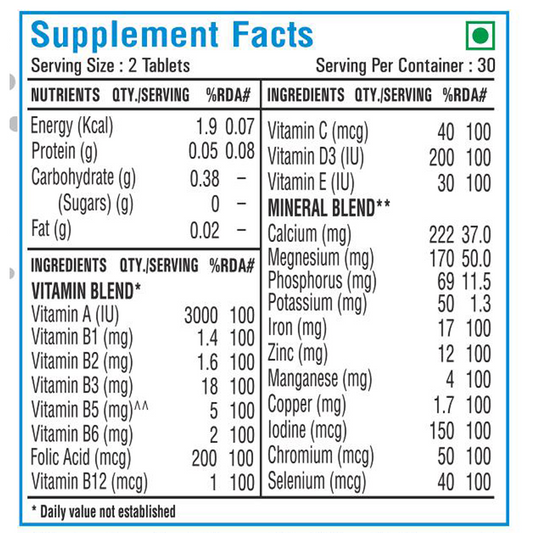
Multivitamin Supplements for Daily Wellness
Eating well sounds simple until you actually track what you eat in a day. Between skipped breakfasts, reheated lunches, and dinners that come more from convenience than planning, most people fall short on a few nutrients without even realizing it. A multivitamin is built for exactly that gap, a daily dose of the vitamins and minerals your meals don't quite cover.
It's not about replacing food. Nothing replaces a proper meal. But a good multivitamin gives your body a reliable backup, so an off week of poor eating doesn't turn into months of low energy, weak immunity, or a nutrient gap you don't notice until it shows up as tiredness or getting sick often.
Key Nutrients Found in a Good Multivitamin
Every multivitamin brings together a mix of vitamins and minerals, but a few of them matter more than the rest for everyday function.
Vitamin C supports your immune system and helps your body take in iron more easily from food. It also helps with skin health and healing, which is why it shows up in almost every multivitamin.
Vitamin D is something most Indians are surprisingly low on, even with plenty of sunlight. It plays a direct role in bone strength, helps your body use calcium, and supports immune health, and a low level often goes unnoticed for years.
Vitamin B12 keeps your energy steady and supports nerve health. People who eat little or no meat are especially likely to run low on B12, since it's mostly found in animal foods.
Zinc supports immune defense and helps with healing and overall body function. It's a small mineral that does a lot of quiet work in keeping your body running well.
Iron is needed to carry oxygen through your blood. Low iron often shows up as constant tiredness or feeling out of breath during normal activity, something many people brush off as just being busy.
Magnesium supports muscle function, nerve health, and better sleep. It's one of the minerals people often don't get enough of through regular meals.
Calcium is the obvious one for bone health, but it also helps with muscle movement and nerve function beyond just keeping bones strong.
Why You Might Need a Multivitamin
Most people assume they're eating "well enough," but a few common habits quietly create gaps. If your diet often skips fruits and vegetables, relies a lot on packaged or processed food, or you train hard and sweat out nutrients regularly, a multivitamin can help fill in what's missing.
It's also worth considering if you deal with constant work stress, travel often, sleep at odd hours, or follow a strict vegetarian or vegan diet, all of which raise your nutrient needs or limit what you naturally get from food.
Benefits of Taking a Daily Multivitamin
Supports Steady Energy Levels: B-vitamins play a direct role in turning food into usable energy, so low levels often show up as that constant tired, slow feeling.
Strengthens Immune Function: Vitamin C, D, and zinc work together to keep your immune system ready, which matters most during season changes or stressful periods.
Improves Bone and Joint Health: Calcium and vitamin D support strong bones over time, something that matters more as you get older but is good to build early.
Supports Better Focus Through the Day: B12 and magnesium both play a role in nerve and brain function, helping you stay sharp through long workdays.
Fills Gaps From Diet Choices: People who eat little meat, follow strict diets, or skip meals often often miss out on nutrients like B12 or iron, which a multivitamin can help cover.
Multivitamin for Men and Multivitamin for Women
Nutrient needs are not the same for everyone. A multivitamin for men usually focuses more on energy, muscle recovery, and heart health, often with less iron since men generally need lower amounts. A multivitamin for women, on the other hand, usually has more iron and calcium, to make up for monthly blood loss and to support long-term bone health.
Picking a formula made for your specific needs, instead of a generic one-size-fits-all tablet, usually works better over time.
How to Take Your Daily Multivitamin
Most multivitamins are taken once a day, ideally with a meal. Taking it with food, especially something with a bit of healthy fat, helps your body absorb vitamins like A, D, and E more easily.
There isn't one "best" time, morning or evening both work fine, as long as you stay consistent. What actually matters is taking it the same way every day, since the benefits build up slowly rather than all at once.
Things to Check Before Buying a Multivitamin
- Look for one that covers 100% of the daily recommended amount, not much more than that
- Check if the formula is made for men, women, or general use based on what you need
- Avoid products that load up heavily on just one nutrient
- Pick a brand that is open about where its ingredients come from and how it's tested
- If you're vegetarian or vegan, check that the capsule and ingredients are plant based
Why Choose Muscled-In Nutrition for Multivitamin Supplements
Muscled-In Nutrition keeps multivitamin formulas simple and honest. Every tablet is dosed to match daily recommended values, not packed with extra amounts your body can't even use. We test every batch for purity, so what's written on the label matches exactly what's inside.
Our multivitamin range includes options made for men, women, and general daily use, so you're not stuck with one generic formula that ignores what you actually need. Whether you're filling small gaps in your meals or supporting a busy, active lifestyle, there's a formula here that fits.
Beyond multivitamins, Muscled-In Nutrition also offers whey protein, BCAA, and pre workout supplements, so your full daily nutrition and training needs can come from one trusted place.
Frequently Asked Questions (FAQ)
Q1. Best multivitamin for daily energy and immunity
Ans. A multivitamin with vitamin C, D, zinc, and B12 supports both steady energy and a stronger immune system when taken regularly.
Q2. Multivitamin for men vs multivitamin for women
Ans. A multivitamin for men usually has less iron and more focus on muscle recovery, while one for women has more iron and calcium for monthly and bone health needs.
Q3. Best time to take multivitamin tablets
Ans. Taking your multivitamin with a meal, morning or evening, helps your body absorb it better, especially vitamins like D and E.
Q4. Vitamin D deficiency signs and multivitamin support
Ans. Low vitamin D often shows up as tiredness, weak bones, or getting sick often, and a daily multivitamin can help keep levels steady over time.
Q5. Can vegetarians take multivitamin supplements safely
Ans. Yes, vegetarians can take multivitamin supplements, and many formulas are made to cover nutrients like B12 and iron that a vegetarian diet often lacks.


