

-
Muscled-IN Nutrition Size Up Mass Gainer for Hard Gainers
Regular price From ₹ 2,600.00Sale price From ₹ 2,600.00 Regular price₹ 4,399.00Sold out -
Muscled-IN Nutrition Size Up Pro Mass Gainer
Regular price ₹ 2,899.00Sale price ₹ 2,899.00 Regular price₹ 4,699.00Sale

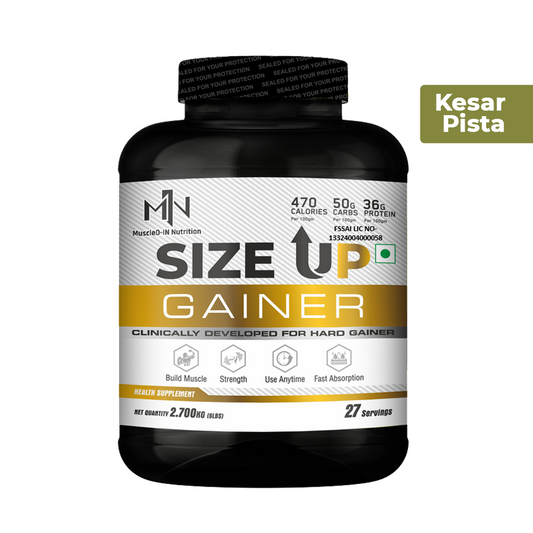

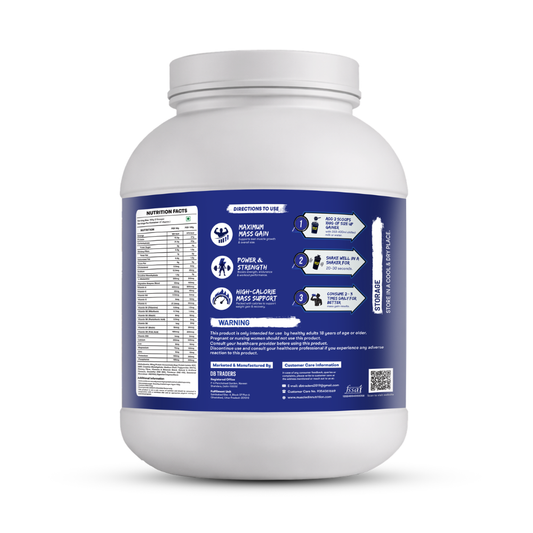
Mass Gainer for Healthy Weight and Muscle Gain
Some people struggle to lose weight. Others struggle to put any weight on, no matter how much they eat. If you fall into that second group, you have probably heard the term "hard gainer" used often, someone whose body burns through calories so fast that regular meals just cannot keep up. That is exactly the gap a mass gainer is built to close.
A mass gainer combines protein, carbohydrates, and a small amount of healthy fat into one calorie dense scoop. Instead of forcing down six heavy meals a day, you get a large part of your daily calorie surplus from a single shake. For someone training hard but still struggling to see the scale move, that convenience makes a real difference.
Mass Gainer vs Weight Gainer: What is Actually Different
These two terms get used in place of each other so often that most people assume they are the same thing. They are not, and the difference comes down to ratio.
Mass Gainer
- Built with a higher protein content compared to a typical weight gainer
- Aimed at people who want size and muscle, not just a higher number on the scale
- Usually balances carbs and protein more evenly, often somewhere between 2:1 and 3:1
- Better suited for people training seriously and chasing lean muscle gain
Weight Gainer
- Leans much more heavily on carbohydrates, with protein playing a smaller supporting role
- Built for people whose main goal is simply adding weight, lean muscle or not
- Often delivers a bigger calorie amount per serving, sometimes touching 1000 calories or more
- Works well for true hard gainers who need a large calorie surplus just to maintain, let alone grow
If your priority is building visible muscle alongside the weight gain, mass gainer is usually the smarter pick. If you just need calories in any form to stop losing weight, a weight gainer does that job.
Who Actually Needs a Mass Gainer
Here is something worth being honest about: not everyone who walks into a gym needs a mass gainer. If you are already eating enough through regular meals and just want more protein, a whey protein scoop will usually serve you better.
A mass gainer makes sense if you have a naturally fast metabolism and struggle to eat enough no matter how hard you try, if you are recovering from an illness or injury and need extra calories to rebuild, or if you are in a serious bulking phase and food alone is not covering your calorie target. For everyone else, food first, supplement second.
How Mass Gainer Supports Muscle Growth
The protein in a mass gainer helps repair and rebuild muscle tissue after training, the same job whey protein does, just at a higher total amount per serving. The carbohydrate portion plays an equally important role, refilling glycogen stores in your muscles so you are not running on empty by your next session.
Many formulas also include digestive enzymes, which help your body break down and absorb all that extra food more comfortably. Without them, a sudden jump in calories can leave you feeling bloated or heavy, especially in the first few weeks of use.
How to Use Mass Gainer the Right Way
Start with one scoop and see how your body responds before moving straight to two. Mixing it with milk instead of water adds extra calories and protein, which is useful if your main goal is aggressive weight gain.
Most people take it either right after a workout to support recovery, or between meals when they know they will not be eating again for a few hours. Avoid replacing actual meals with it entirely, it is there to add to your diet, not stand in for it.
Common Concerns Around Mass Gainer Use
The biggest worry people have is unwanted fat gain, and that concern is fair. Going beyond the recommended amount of scoops without matching it to actual training intensity will add fat just as easily as muscle. The fix is simple: match your intake to your training, and adjust if the scale moves faster than your strength does.
Digestive discomfort is another common issue, especially early on. Starting with a smaller serving and gradually increasing it gives your stomach time to adjust, rather than overwhelming it from day one.
Why Choose Muscled-In Nutrition for Mass Gainer
Muscled-In Nutrition keeps its mass gainer formulas honest. There are no empty filler carbs just to pad the calorie count, and no exaggerated protein claims that do not hold up under testing. Every batch is checked for quality, so the numbers on the label are the numbers you are actually getting in your shaker.
We offer formulas built for different goals, whether you are a genuine hard gainer needing serious calories or someone chasing a more balanced, lean approach to bulking. Pair it with consistent training, proper sleep, and a reasonably solid diet, and a mass gainer becomes a real tool rather than just an expensive shake.
Along with mass gainer, Muscled-In Nutrition also carries whey protein, BCAA, and pre workout, so your entire training and recovery routine can come from a brand that is open about what is actually inside every tub.
Frequently Asked Questions (FAQ)
Q1. Best mass gainer for skinny guys and hard gainers
Ans. A mass gainer with a higher calorie count and balanced protein to carb ratio works well for hard gainers who struggle to eat enough through regular meals alone.
Q2. Mass gainer vs weight gainer for muscle building
Ans. Mass gainer is better suited for muscle building since it carries a higher protein ratio, while weight gainer focuses mainly on adding calories through carbohydrates.
Q3. Does mass gainer cause fat gain or bloating
Ans. Mass gainer can lead to fat gain if taken in excess without matching training intensity, and bloating can happen if you increase your dose too quickly.
Q4. Mass gainer dosage and how to use it daily
Ans. Most people take one to two scoops a day, mixed with milk or water, either after a workout or between meals for added calories.
Q5. Is mass gainer safe for daily use
Ans. Yes, mass gainer is safe for daily use when taken at the recommended dose and combined with regular training and a balanced diet.


